
Last reviewed: September 3, 2026
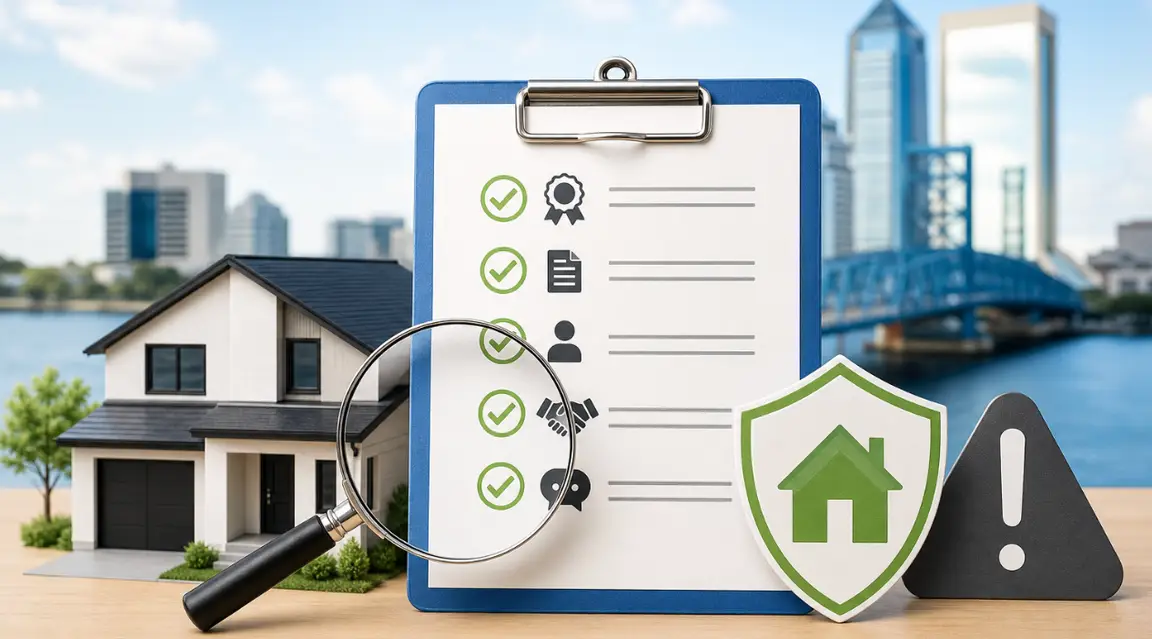
Before you sign a cash purchase agreement for your Jacksonville house, confirm who the buyer is, how the offer was calculated, what can change, which costs you may owe, whether the contract can be assigned, how title and closing will be handled, and what happens if either party does not close. A legitimate conversation should make those points clearer, not leave you with more questions.
I am Jesse Wyatt, owner of Synergy Buys Houses Jacksonville. I buy houses throughout Northeast Florida, including properties with repairs, tenants, inherited ownership, liens, code issues, or other complications. I also believe sellers should slow down long enough to understand the contract, even when they want a fast closing.
Here are the seven questions I would ask any cash home buyer before signing.
1. Who Is the Buyer Named in the Contract?
Ask for the full legal name of the person or company that will sign the purchase agreement. The website name, advertisement, and contract party are not always the same.
If the contract names a corporation or limited liability company, search the entity through the Florida Division of Corporations. Confirm that the name matches the contract and review its status and filing history. A Sunbiz record is a useful verification point, but it does not guarantee that a company will perform.
A person may also purchase property individually, so the absence of an LLC does not automatically prove something is wrong. The important question is whether the buyer can clearly identify the contracting party and who has authority to sign for it.
Does a Cash Home Buyer Need a Florida Real Estate License?
Buying property as a principal is different from representing another person as a broker or sales associate. Florida’s real estate licensing law focuses heavily on activity performed for another person in exchange for compensation. Licensing depends on what the person is actually doing, not simply whether an advertisement uses the phrase “cash buyer.” Review Chapter 475 of the Florida Statutes for the legal definitions and exemptions.
If someone says they are a licensed Florida real estate broker or sales associate, verify that claim through the Florida Department of Business and Professional Regulation.
2. Are You Buying the House Directly, or Can the Contract Be Assigned?
Ask whether the named buyer expects to purchase the property or may assign the contract rights to another investor. Do not assume one answer from the company’s advertising.
An assignment provision does not automatically make a transaction improper. It can change who ultimately closes and may affect certainty, access, communications, and timing. Read the assignment language and ask:
- Is assignment permitted?
- Will I be notified if another buyer is involved?
- Does the original buyer remain responsible if the assignee does not close?
- Can the purchase price or closing date change because of an assignment?
- Who receives any assignment fee, and does it change my agreed proceeds?
Our Jacksonville wholesale-property guide explains why the contract language matters more than the label a buyer uses.
3. Can You Show Reasonable Evidence That You Can Close?
It is reasonable to ask a cash buyer for proof of funds or financing capacity. That may be a recent bank letter, a redacted account statement, a lender or funding letter, or other evidence tied to the buyer named in the agreement.
A buyer should be allowed to protect private account numbers and unrelated financial details. The goal is not to collect sensitive information. It is to confirm that the buyer has a credible path to closing.
Ask whether the funds are the buyer’s own, come from a lender or private funding source, or depend on finding another purchaser. Then compare that answer with the financing and assignment terms in the contract.
4. How Was the Offer Calculated, and What Could Change It?
A direct cash offer will usually be below the potential retail value of a repaired, market-ready home. The buyer may consider recent comparable sales, the property’s current condition, needed repairs, resale expenses, holding costs, financing costs, and risk.
There is no single formula every buyer must use. Ask for a plain-language explanation of the property condition and assumptions that affected the number.
Most importantly, ask what happens after you sign. The agreement should explain any inspection, due-diligence, access, cancellation, or price-reduction rights. A high initial number is not very useful if the contract gives the buyer broad rights to cancel or reduce it later without clearly defined limits.
Compare the purchase price and terms with a realistic listing scenario. Our Jacksonville cash-buyer versus agent comparison explains the price, repair, showing, financing, and timing tradeoffs.
5. Which Costs Will I Pay, and What Are My Estimated Net Proceeds?
Do not rely on a verbal statement that there are “no costs.” Ask the buyer to put every fee, credit, closing-cost obligation, and deduction in the written agreement.
Synergy does not charge the seller a Synergy service fee or agent commission. Our contract states which closing costs Synergy agrees to pay. That does not mean the purchase price will always equal the seller’s final proceeds.
Existing mortgages, delinquent taxes, liens, assessments, judgments, prorations, probate expenses, seller credits, and other obligations may be paid from the proceeds. The title or closing company prepares the settlement statement showing the final amount due to the seller.
The Florida Bar’s home-buying guide explains that responsibility for title insurance, closing services, taxes, assessments, and other expenses should be made explicit because contracts differ.
Ask for an estimated net sheet when practical, then compare that estimate with the final settlement statement before signing at closing.
6. Who Will Handle Title and Closing?
Ask which title company or closing attorney is expected to handle the transaction, when that selection will occur, and who will pay the agreed title and closing charges. The company may not have been selected before the initial offer, but the process should be explained in the contract.
You can verify Florida real estate license claims through DBPR. You can also search for title agents and title agencies through the Florida Department of Financial Services license search.
Confirm closing instructions using contact information you independently obtained. The Florida Attorney General warns that criminals may impersonate title or escrow representatives and send fraudulent wire instructions. If payment instructions change, call the closing company using a known telephone number before sending money.
The closing agent may prepare documents and complete the transaction, but that does not always mean the closing agent represents your personal legal interests. For contract advice, consult your own qualified Florida attorney.
7. What Happens if the Date Changes or Someone Does Not Close?
A proposed closing date is not the same as a guarantee. Ownership, title, liens, lender payoffs, probate, tenant possession, access, municipal issues, and document requirements can affect timing.
When the correct seller is authorized to sign and title is clear, some Synergy purchases may close in as little as seven days. Other transactions take longer. A seller who needs additional time can request a later date, but the final schedule must be written into the agreement.
Ask what happens if the buyer misses the closing date, whether an extension is automatic, what earnest money is required, who holds the deposit, and what remedies apply if either party defaults.
Do not assume you can cancel after signing. A seller’s cancellation rights depend on the contract and applicable law. The Florida Bar recommends consulting a Florida-licensed real estate lawyer before signing a purchase contract, especially when the terms or situation are unusual.
Red Flags That Deserve a Pause
| Warning sign | What to ask for instead |
|---|---|
| The buyer will not identify the legal contract party | The exact individual or entity name and authorized signer |
| Pressure to sign before you can read the agreement | Time to review the complete contract and obtain independent advice |
| Blank sections or missing attachments | A complete copy with every material term filled in |
| An unexplained upfront payment directly to the buyer | Written identification of every payment, recipient, purpose, and refund term |
| A high offer with vague inspection or cancellation language | Written conditions describing what can change and when |
| No reasonable funding explanation | Redacted proof of funds or credible financing evidence |
| The buyer avoids questions about assignment | The actual assignment clause and an explanation of its effect |
| Verbal promises that are absent from the agreement | Every important promise included in writing |
| Last-minute wire-instruction changes | Independent verification with the title or closing company |
One warning sign does not always prove fraud. It is a reason to stop, ask questions, verify the records, and avoid signing until the answer makes sense.
A Simple Verification Checklist
Before accepting an offer, match the contract party with public records when applicable. Verify any claimed professional license through the correct Florida agency. Confirm the telephone number and who will communicate with you after signing.
Review the purchase price, earnest money, inspection rights, cancellation rights, assignment provision, cost allocation, proposed closing date, title process, property condition, remaining belongings, possession, and default remedies. Save a complete copy of every signed document.
If the property involves foreclosure, probate, divorce, bankruptcy, tenants, disputed ownership, or a significant title problem, get advice from the appropriate qualified professional. A buyer can explain its offer, but it should not replace your legal, tax, or financial advisers.
How Synergy Handles the Conversation
When a Jacksonville homeowner contacts me, I start with the property and the problem they are trying to solve. I review the condition, occupancy, ownership, title concerns, timeline, and recent comparable sales before deciding whether Synergy can make an offer.
The written agreement identifies the buyer, purchase price, access and inspection terms, proposed closing date, property condition, and agreed cost allocation. There is no obligation to accept an offer. I want the seller to compare the complete terms with their other options, including a realistic listing plan when that may produce a better result.
A direct sale trades some potential retail price for convenience, condition flexibility, fewer public showings, and less dependence on a retail buyer’s mortgage approval. Whether that trade makes sense depends on the house and the seller’s priorities.
Frequently Asked Questions
Is a Sunbiz registration enough to prove a buyer is legitimate?
No. Sunbiz can confirm an entity’s public filing status and history, but it does not guarantee funding, performance, or honest conduct. Use it as one check alongside the contract, proof of funds, reviews, title process, and direct communication.
Does every Jacksonville cash buyer need a real estate license?
Not necessarily. Buying as a principal is different from performing brokerage services for another person. If someone claims to be a broker or sales associate, verify the license through Florida DBPR. If you are unsure whether a person’s activity requires a license, ask a qualified Florida attorney or DBPR.
Should a seller ask for proof of funds?
Yes, reasonable funding verification can help confirm that the buyer has a credible closing plan. Allow private account numbers and unrelated balances to be redacted. Compare the name or funding relationship with the buyer named in the agreement.
Does a no-fee cash offer mean the purchase price equals my final proceeds?
No. Mortgages, taxes, liens, assessments, prorations, probate expenses, and other seller obligations can reduce net proceeds. Review the contract and settlement statement.
Can a cash buyer reduce the price after inspection?
That depends on the agreement. Read the inspection, due-diligence, cancellation, and price-change terms before signing. Ask the buyer to explain exactly what could change the number and by what deadline.
Can I cancel after signing a cash purchase agreement?
Only if the contract or applicable law gives you that right. Do not assume there is an automatic seller cancellation period. Consider having your own Florida attorney review the agreement before you sign.
Review the Buyer and the Contract Before You Decide
Take enough time to understand who is buying the property and what the written agreement actually requires. A professional buyer should be willing to explain the offer, the contract, and the closing process without pushing you to sign an incomplete document.
You can call me at (904) 867-8673 or request a no-obligation cash offer. I will explain how I evaluated the property and what would need to happen before closing.
Sources
- Florida Division of Corporations, Entity Name Search
- Florida Statutes, Chapter 475
- Florida Department of Business and Professional Regulation, Verify a Licensee
- The Florida Bar, Consumer Pamphlet: Buying a Home
- Florida Department of Financial Services, Licensee Search
- Florida Attorney General, Be Aware of Real Estate Scams
This article provides general information and is not legal, tax, or financial advice.